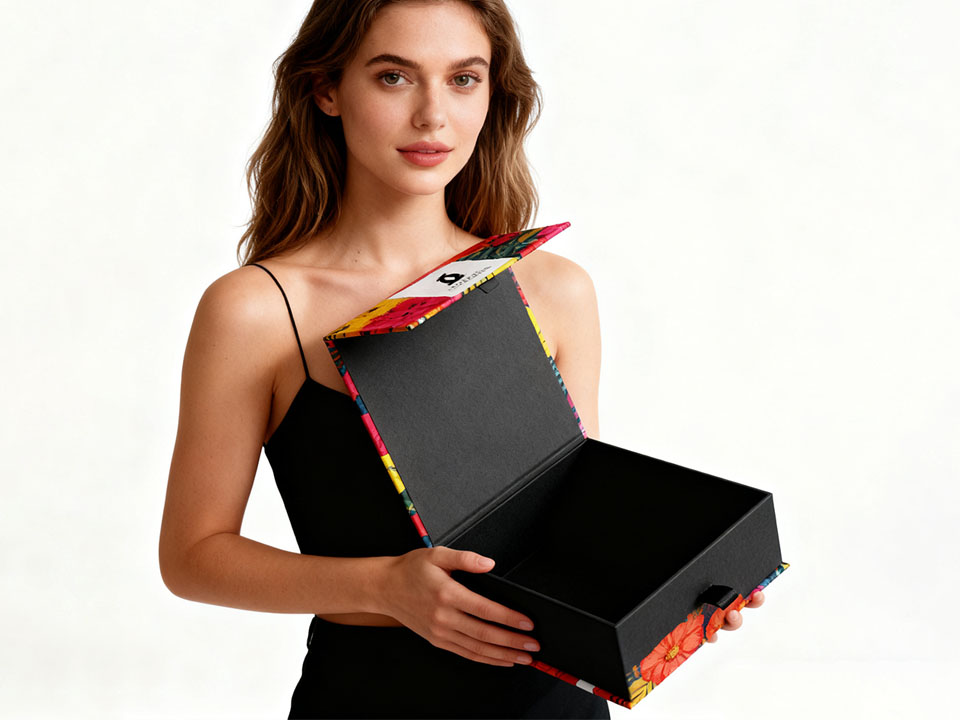
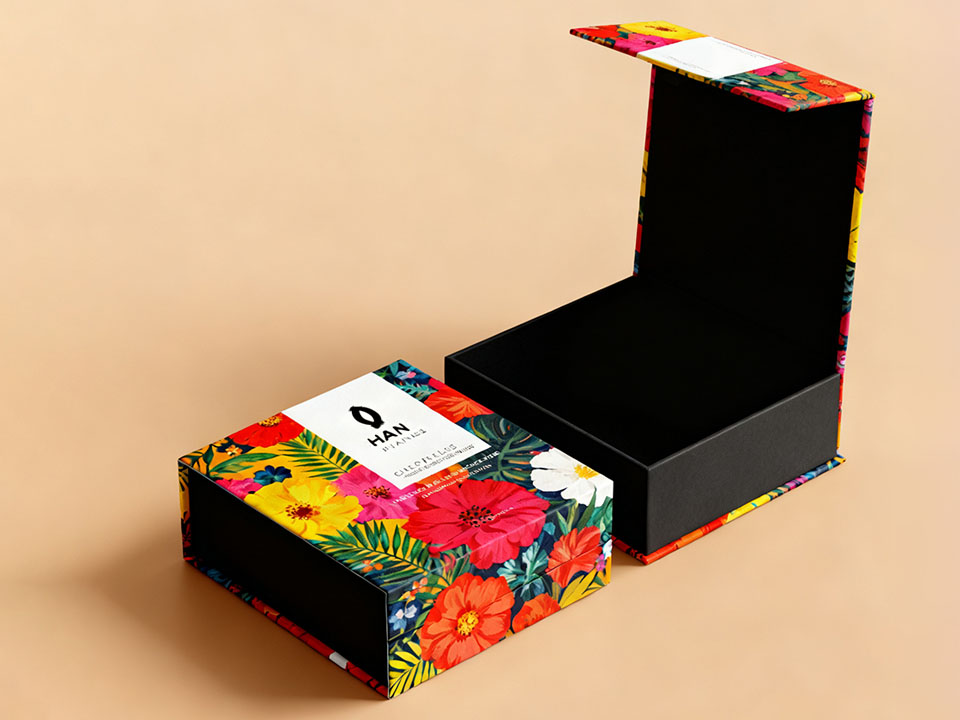
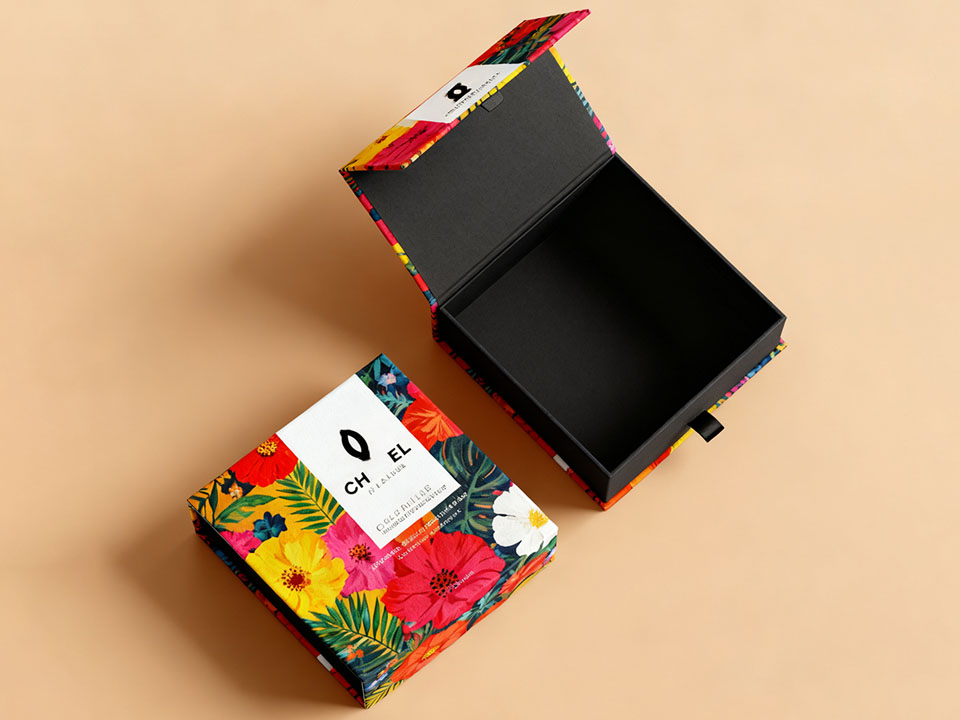
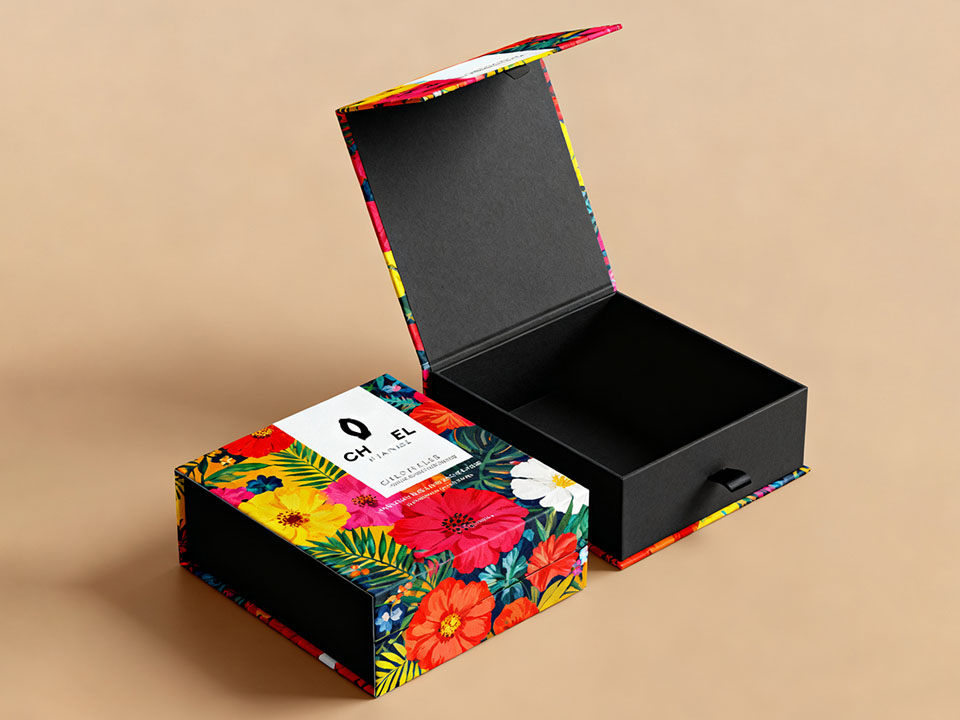
Pozwól naszym ekspertom ds. opakowań przeanalizować Twój projekt
Przed wyjazdem prosimy o przekazanie nam informacji dotyczących wymagań dotyczących opakowań. Nasi eksperci mogą przeanalizować Państwa szablon wykroju, projekt graficzny, materiały, wkładki, wykończenie, certyfikaty, minimalną wielkość zamówienia (MOQ), kontrole jakości oraz oczekiwania dotyczące dostawy.
Opakowania sztywne z zewnątrz wydają się proste. Pudełko to po prostu pudełko, prawda?
Niezupełnie.
Wybrana konstrukcja decyduje o tym, w jaki sposób klient po raz pierwszy ma kontakt z produktem, jak łatwo zespół pakujący go ładuje, ile martwej przestrzeni przewozisz przez ocean oraz czy opakowanie klasy premium nadal sprawia wrażenie ekskluzywnego po tym, jak z linii produkcyjnej zejdzie 5 000 sztuk.
Najczęstsze rodzaje sztywnych pudełek są to konstrukcje dwuczęściowe (pokrywa i podstawa), z zamknięciem magnetycznym, szufladowe, z uchwytem na ramię i szyjką, typu książkowego, składane oraz konstrukcje specjalistyczne, takie jak pudełka typu clamshell lub z podwójnymi drzwiami.
Najważniejsze pytanie nie brzmi po prostu:, Który z nich wygląda najlepiej?
Jest to: Która konstrukcja najlepiej sprawdza się w przypadku danego produktu, wkładki, kanału dystrybucji, docelowego kosztu oraz planowanej kolejności rozpakowywania?
To rozróżnienie ma większe znaczenie, niż zdaje sobie sprawę wielu nabywców.
Według Raport firmy Fortune Business Insights dotyczący rynku pudeł sztywnych, światowy rynek sztywnych pudełek został wyceniony na 65,44 mld USD w 2025 r. i przewiduje się, że wzrośnie z 68,34 mld USD w 2026 r. do 100,35 mld USD do 2034 r. W 2025 r. na Amerykę Północną przypadało 33,21% rynku.
Opakowania klasy premium stanowią istotną część tego popytu. Wywiad Mordoru podaje, że kartony składane i pudełka sztywne stanowiły 41 191 TP3T rynku opakowań luksusowych w 2025 r., przy czym prognozuje się, że segment ten będzie rósł w tempie 5,62% CAGR do 2031 roku.
Kupujący mają więc do wyboru wiele opcji konstrukcyjnych.
Właśnie przy wyborze między nimi robi się ciekawie.
Sztywne panele zaprojektowane tak, by można je było złożyć na płasko
Handel elektroniczny, programy eksportowe, duże pudełka na prezenty
Premia po montażu
Średni–wysoki
Świetnie
Konstrukcja specjalistyczna
Typ „clamshell”, dwudrzwiowy, okrągły lub o niestandardowej geometrii
Edycje limitowane i projekty realizowane przez marki
Niezwykle charakterystyczny
Wysoki
Różne
Nie ma jednego zwycięzcy.
Każda konstrukcja rozwiązuje inny problem związany z pakowaniem.
1. Dwuczęściowe sztywne pudełka z pokrywą i podstawą
To jest klasyczny dekoder.
Produkt jest umieszczony na sztywnej podstawie. Na wierzchu znajduje się osobna pokrywa. Po podniesieniu pokrywy produkt staje się widoczny.
To proste.
Właśnie ta prostota sprawia, że konstrukcja dwuczęściowa nadal sprawdza się w branżach takich jak biżuteria, świece, perfumy, produkty delikatesowe, akcesoria odzieżowe, elektronika oraz programy upominkowe.
Jakość dwuczęściowych pudełek w dużej mierze zależy od dopasowania pokrywy do podstawy. Jeśli są zbyt ciasno dopasowane, klient ma trudności z otwieraniem pudełka. Jeśli są zbyt luźne, pokrywa sprawia wrażenie niedopasowanej.
Najlepszym rozwiązaniem jest kontrolowane tarcie.
Jeśli pokrywa została prawidłowo zaprojektowana, podnosi się płynnie, ale nie spada podczas przenoszenia pudełka.
Może się to wydawać drobnym szczegółem. Ale tak nie jest.
Postrzeganie jakości jako „premium” często wynika z tolerancji, których ludzie nie potrafią świadomie zidentyfikować.
Równe zawinięcie. Prostokątne rogi. Jednolita głębokość pokrywy. Kontrolowane tarcie. Produkt leżący dokładnie tam, gdzie powinien.
Nie potrzebujesz do tego magnesów.
Dla nabywców poszukujących dostawców sztywne pudełka na zamówienie, konstrukcja dwuczęściowa jest często rozsądnym punktem wyjścia, ponieważ zapewnia znaczną swobodę w zakresie grubości kartonu, papieru do owijania, wkładek, tłoczenia folią, wytłaczania, wstążek i innych elementów dekoracyjnych, nie wymagając przy tym zastosowania skomplikowanego mechanizmu otwierania.
Kiedy warto wybrać dwuczęściowe pudełko sztywne?
Warto to wziąć pod uwagę, gdy:
produkt musi zajmować niewiele miejsca;
chcesz, aby prezentacja miała tradycyjny, ekskluzywny charakter;
mechanika otwierania powinna pozostać intuicyjna;
operacje magazynowe i pakowanie muszą pozostać proste;
chcesz mieć większy budżet na wykończenie, wkładki lub materiały specjalistyczne.
Dla wielu marek stanowi to punkt odniesienia, z którym należy porównywać inne struktury.
2. Sztywne pudełka z zamknięciem magnetycznym
Pudełka magnetyczne przyciągają uwagę.
Wystarczy otworzyć ją podczas spotkania w sprawie zaopatrzenia, zamknąć klapkę, usłyszeć to delikatne trzasnięcie, a ktoś zazwyczaj powie: “To wygląda na drogie”.”
Czasami tak jest.
Czasami magnes odgrywa większą rolę w prezentacji sprzedażowej niż kiedykolwiek odegra dla samego klienta.
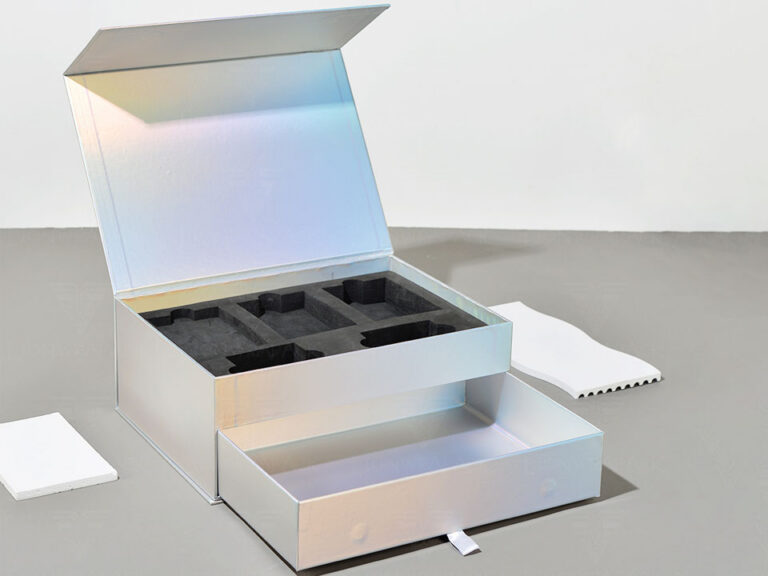
Typowe sztywne pudełko z zamknięciem magnetycznym składa się z sztywnego panelu na zawiasach oraz ukrytych magnesów umieszczonych wewnątrz owiniętej tektury. Taka konstrukcja zapewnia dużą powierzchnię ekspozycyjną i sprawdza się szczególnie dobrze w przypadku zestawów kosmetycznych, elektroniki, zestawów odzieżowych, upominków firmowych, paczek dla influencerów oraz produktów wieloskładnikowych.
Dobrze zaprojektowane sztywne pudełka z zamknięciem magnetycznym może zapewnić doskonałe wrażenia podczas prezentacji, zwłaszcza gdy produkt faktycznie zyskuje dzięki większej powierzchni otwarcia.
Uważam jednak, że parametry techniczne pudełek magnetycznych są zdecydowanie zawyżone.
Marki często sięgają po nie, bo ktoś uznał, że magnesy są synonimem luksusu.
Nie.
Źle zaprojektowane pudełko magnetyczne, charakteryzujące się słabą siłą zamykania, nierównymi szczelinami, źle dopasowanymi panelami, nadmierną ilością pustej przestrzeni lub niewygodnym sposobem otwierania, może sprawiać wrażenie tańszego niż pięknie wykonane pudełko dwuczęściowe.
A magnesy wprowadzają zmienne.
Ważne jest położenie magnesu. Ważna jest polaryzacja. Ważna jest grubość płyty. Ważna jest geometria zawiasu. Po owinięciu, sklejeniu, uformowaniu i montażu przeciwległe panele muszą stykać się w przewidzianym miejscu.
Tolerancje produkcyjne zaczynają się kumulować.
Problem z pudełkiem magnetycznym, o którym ciągle myślę
Niedawno natknąłem się na dyskusję na temat projektowania opakowań, która doskonale oddawała tę kwestię.
Kupujący nabył elegancko wyglądające pudełko magnetyczne i początkowo był z niego bardzo zadowolony. Pod względem wizualnym wszystko wyglądało idealnie.
Następnie wkładają do środka sam produkt.
Produkt był tak ciasno dopasowany, że jego zdejmowanie stało się frustrujące. Magnetyczne zapięcie nie było tak intuicyjne, jak się spodziewano, a na produkcie nie było żadnego wyraźnego miejsca wskazującego klientowi, za co należy pociągnąć.
Ktoś, kto nie zna budowy tego urządzenia, mógłby łatwo zacząć naciskać na niewłaściwą część obudowy.
To kiepska konstrukcja opakowania owinięta w drogi papier.
Zauważyłem również, że producenci drukarek i sztywnych pudełek zwracają uwagę na to, jak łatwo może dojść do nierównomierności działania zamknięć magnetycznych, gdy podczas produkcji dochodzi do przesunięcia magnesów lub niewspółosiowości paneli.
Właśnie dlatego radzę nabywcom, aby nie zatwierdzali tego rodzaju pudełek na podstawie samych wizualizacji.
Przeprowadź badanie próbki fizycznej.
Otwórz to.
Zamknij to.
Daj to komuś, kto jeszcze tego nie widział.
Obserwuj, co robią, nie dając im żadnych wskazówek.
Następnie zapytaj, czy konstrukcja nadal sprawia wrażenie wysokiej jakości.
3. Sztywne pudełka z wysuwanymi szufladami
Szuflada zmienia kolejność wyświetlania elementów.
Zamiast podnosić pokrywę, klient wyciąga wewnętrzną tackę z zewnętrznego rękawa.
Ten dodatkowy ruch buduje napięcie.
To sprawia, że sztywne pudełka z szufladami szczególnie przydatne w przypadku świec, czekolady, zegarków, biżuterii, drobnych akcesoriów, kosmetyków, sprzętu elektronicznego oraz upominków, gdzie samo rozpakowanie wpływa na postrzeganie wartości produktu.
Używanie uchwytów w postaci wstążek jest powszechne, ale nie jest obowiązkowe.
W niektórych projektach stosuje się:
zakładki z wstążką;
wycięte nacięcia na palce;
uchwyty z tkaniny;
metalowe uchwyty;
wpuszczone zakładki z papieru;
częściowo odsłonięte tacki wewnętrzne.
Kluczową kwestią techniczną jest tarcie w tacce.
Za luźne?
Szuflada wysuwa się, gdy klient odbiera paczkę.
Za ciasne?
Klient pociąga mocniej, nagle puszcza tacę i omal nie wyrzuca produktu na drugą stronę pomieszczenia.
Nie jest to idealne rozwiązanie.
Na końcowy opór przesuwu mogą wpływać: wilgotność, grubość papieru opakowaniowego, tolerancja tektury, kleje, odkształcenie tulei oraz nacisk wkładki.
Dlatego też zestaw materiałów przeznaczonych do produkcji seryjnej powinien być jak najbardziej zbliżony do zatwierdzonej próbki.
Szuflady najlepiej sprawdzają się, gdy ich widoczna część jest zamierzona
Pomyśl o sekwencji początkowej.
Tuleja zewnętrzna.
Pociągnij za języczek.
Ruch.
Produkt pojawia się stopniowo.
Ta krótka przerwa może okazać się przydatna w przypadku produktów z wyższej półki.
Nie należy jednak dodawać tego elementu wyłącznie dla efektu. Jeśli pracownicy sklepu muszą wielokrotnie otwierać i ponownie pakować pudełko lub jeśli klient potrzebuje natychmiastowego dostępu do zawartości, prostsza konstrukcja składająca się z pokrywy i podstawy może sprawdzić się lepiej.
4. Sztywne pudełka na ramiona i szyję
W przypadku skrzyń ramienno-szyjnych precyzja konstrukcyjna staje się wyraźnie widoczna.
Konstrukcja zazwyczaj składa się z dolnej podstawy, wystającej ponad nią wewnętrznej szyjki lub ramienia oraz pokrywy, która przylega do tej podwyższonej części.
W stanie zamkniętym konstrukcja może tworzyć widoczną linię między pokrywą a podstawą.
Ta linia może stać się częścią projektu.
Wystarczy użyć kontrastującego koloru przy szyjce, a sama konstrukcja nagle zaczyna pełnić rolę ozdoby.
Czarna obudowa. Złoty pasek.
Biała obudowa. Czerwona szyjka.
Textured paper outside. Bright printed shoulder inside.
No complicated graphics required.
High-quality shoulder neck rigid boxes are particularly appropriate for perfume, spirits, cosmetics, watches, chocolate, candles, premium accessories, and collectible products.
The inner neck also gives the box an architectural feel that two-piece boxes do not naturally have.
But tolerances matter again.
If the shoulder is too high, the proportions may look awkward.
If the clearance is too small, the lid can drag against the neck.
If the outer wrap and inner wrap create unexpected thickness, the finished dimensions may move enough to change the fit.
For this style, do not evaluate only the closed box.
Inspect the reveal when the lid comes off.
The shoulder is part of the presentation.
5. Book-Style and Hinged Rigid Boxes
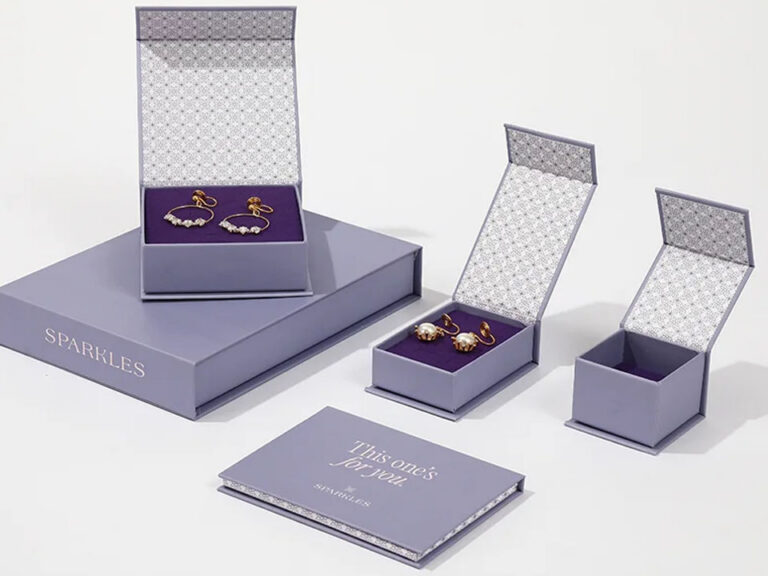
Book-style rigid boxes open horizontally around a hinged edge or spine.
The format creates a large printable surface and gives brands room to build a sequence.
Cover.
Inside lid.
Product presentation.
Insert.
Sometimes another compartment underneath.
That makes the structure useful for:
sample kits;
fragrance collections;
corporate presentation boxes;
premium documents;
membership kits;
electronics;
limited editions;
influencer packages.
A magnetic closure can be added, but a book-style structure does not inherently need magnets. Ribbon ties, mechanical tabs, friction closures, and other systems can also work.
This distinction matters.
Book-style describes the opening architecture. Magnetic describes the closure mechanism.
They frequently appear together, which is why buyers sometimes treat them as the same thing.
Nie są.
For larger gift programs, book-style packaging also creates a generous branding canvas. But that additional board area can increase material consumption and freight volume.
Measure the value of the presentation area before paying for it.
6. Collapsible Rigid Boxes
Traditional rigid boxes are usually supplied assembled.
That means you are shipping air.
A lot of it.
For local retail programs, that may not be a major issue. For containerized international shipping, warehouse-heavy programs, or large-format gift boxes, it can become very expensive.
Collapsible rigid boxes attack that problem.
The panels are engineered so the box can ship relatively flat and then be erected before packing.
Magnets, pressure-sensitive adhesive, locking corners, or other joining systems may be used depending on the design.
The business case is straightforward:
lower shipping and storage cube versus a conventional pre-assembled rigid box.
But there is a trade-off.
You are moving some complexity downstream.
Someone has to erect the box.
That might be your contract packer, warehouse, fulfillment partner, retail operation, or customer.
A structure that costs more per box can still reduce the total landed packaging cost.
For global B2B sourcing, that distinction matters.
7. Specialty Rigid Box Styles
Once you move beyond standard structures, the list gets much longer.
Rigid board can be engineered into:
clamshell boxes;
double-door boxes;
hexagonal boxes;
octagonal boxes;
heart-shaped boxes;
round boxes;
flip-top boxes;
suitcase-style boxes;
multi-layer boxes;
boxes with rotating platforms;
nested boxes;
multi-drawer presentation systems.
This is where packaging can become genuinely memorable.
It is also where things can get expensive quickly.
Every unusual panel, hinge, joint, wrap direction, insert layer, and closure adds another place where tolerance can stack.
That does not mean specialty structures are a bad idea.
It means they need a commercial reason to exist.
If the box is supporting a product launch, limited-edition collection, VIP program, press kit, or flagship SKU, an unusual opening architecture may deliver real value.
For a high-volume everyday SKU?
Maybe not.
Sometimes engineering discipline beats novelty.
Rigid Box Style Is Only Half the Design
Buyers often spend 80% of the meeting discussing the exterior and 20% discussing everything inside.
I would almost reverse that ratio.
A piece of luxury rigid box packaging works only when the outer structure and internal fitment operate as one system.
The insert determines:
product movement;
clearance;
extraction;
orientation;
shock protection;
presentation height;
perceived precision.
A perfume bottle trapped inside an EVA insert is not premium.
Neither is a watch rattling around in an oversized cavity.
Neither is a candle that requires the customer to turn the entire box upside down to remove it.
The product needs enough retention to survive handling but enough clearance to be removed naturally.
To brzmi jak coś oczywistego.
You would be surprised how often it gets missed.
How Should Buyers Choose Between Different Rigid Box Styles?
I use six filters.
1. Start with product geometry
Measure the actual production product.
Not the CAD dimensions from six months ago.
Not the prototype that changed after tooling.
The real production SKU.
Record:
length;
width;
height;
weight;
center of gravity;
fragile areas;
protruding components;
cosmetic surfaces that cannot be rubbed.
Then design outward from the product.
2. Define the extraction sequence
Ask one simple question:
How does the customer physically remove the product?
Lift it?
Pull a ribbon?
Grip two sides?
Slide it out?
Remove a secondary layer first?
If nobody can answer that question during structural design, sampling is going to teach you the answer later.
Usually at your expense.
3. Design the insert and outer box together
Do not finalize the box and then squeeze an insert into the remaining space.
Insert thickness changes cavity dimensions.
Wall thickness changes product clearance.
Ribbon placement changes extraction.
Accessory compartments affect overall footprint.
Treat the packaging as one assembly.
4. Calculate logistics before falling in love with the structure
A few millimeters can matter when multiplied by 10,000 boxes.
So can a magnetic flap that increases the footprint.
Run palletization and carton loading calculations early.
Ask for:
master carton quantity;
carton dimensions;
carton gross weight;
pallet quantity;
estimated CBM;
assembled versus flat-pack comparison.
A beautiful packaging concept can look a lot less beautiful when the freight quote arrives.
5. Test production tolerances
A handmade white sample is useful for reviewing proportions.
It is not enough for approving mass production.
Whenever possible, evaluate a production-quality printed sample using the intended:
greyboard thickness;
wrapping paper;
lamination;
insert;
magnet;
ribbon;
foil;
coating;
adhesive system.
Then test the box with the actual product.
Not once.
Repeatedly.
6. Match complexity to commercial value
Do not spend $3 solving a $0.30 packaging problem.
And do not save $0.20 if it creates a return, breakage, or usability problem worth ten times that amount.
The correct structure sits somewhere between engineering performance, brand positioning, manufacturing reality, and landed cost.
Are More Complicated Rigid Boxes More Sustainable?
Not automatically.
A paper-based box can have recycling advantages, but recyclability depends on the complete material system—not simply whether the outside looks like paper.
Magnets, plastic laminations, foam inserts, metal components, adhesives, textile ribbons, and mixed-material decorations can complicate recovery.
This deserves attention because fiber recovery infrastructure is already substantial in key markets.
For brands selling into Europe, that gives packaging teams another reason to question unnecessary material combinations.
If a simpler two-piece box with a paperboard insert meets the commercial requirement, adding magnets, foam, plastic lamination, and decorative hardware simply to make the pack “feel luxury” deserves a second look.
Premium packaging does not have to mean maximum material.
Sometimes restraint looks better anyway.
What Should You Test Before Approving a Rigid Box for Mass Production?
Before signing the golden sample, I would check at least these points:
Does the actual product fit without excessive movement?
Can a first-time user immediately understand how the box opens?
Can the product be removed without shaking, digging, or excessive force?
Does the lid open smoothly?
Does a two-piece lid have controlled friction?
Does a drawer slide consistently without falling out?
Are magnets aligned and strong enough?
Does the insert remain seated during transportation?
Are delicate product surfaces protected from rubbing?
Do hinges repeatedly open without cracking the wrap?
Do corners remain square?
Are visible gaps consistent?
Does the packaging still look proportional with the product inside?
Can warehouse staff assemble and pack it efficiently?
Does the master-carton configuration make financial sense?
This is where a lot of packaging problems disappear.
Not in the mood board.
Not in the 3D rendering.
In the sample room.
Which Rigid Box Style Is Best?
There is no single best rigid box.
A two-piece box can be the best choice for a candle.
A drawer box can be better for jewelry.
A shoulder-neck structure may suit a premium fragrance bottle.
A magnetic presentation box can make sense for a multi-product beauty kit.
A collapsible structure may beat all of them when freight and warehouse volume dominate the economics.
That is why I would never start a rigid-box project by asking:
“Which style looks the most luxurious?”
Start with:
What does the product need the packaging to do?
Then define the opening sequence, fit, insert, production tolerances, shipping method, assembly process, budget, and sustainability requirements.
Once those variables are clear, choosing between the different types of rigid boxes becomes much easier.
And usually cheaper.
Najczęściej zadawane pytania
What are the main types of rigid boxes?
Short answer: The main types are two-piece, magnetic closure, drawer, shoulder-neck, book-style, collapsible, and specialty rigid boxes.
The differences are mainly structural. Each style changes how the package opens, how the product is supported, how difficult the box is to manufacture, and how efficiently it can be stored and shipped.
What is the simplest rigid box style?
Short answer: A two-piece lid-and-base box is generally one of the simplest and most versatile rigid box structures.
It uses a separate lid and base without requiring hinges or magnets. Good tolerances are still necessary, especially where the lid and base create the opening friction.
Are magnetic rigid boxes more luxurious?
Short answer: Not necessarily. Magnets can improve the closing experience, but manufacturing quality matters more than the closure mechanism.
A poorly aligned magnetic box can feel cheap. A precisely manufactured two-piece or shoulder-neck box with excellent wrapping, fit, finishing, and insert design can deliver stronger premium perception.
What products are drawer rigid boxes best for?
Short answer: Drawer boxes work particularly well for jewelry, watches, chocolate, candles, cosmetics, electronics, and small premium accessories.
Their sliding tray creates a controlled product reveal. The main engineering consideration is maintaining consistent friction between the tray and outer sleeve.
What is a shoulder-neck rigid box?
Short answer: A shoulder-neck box uses a raised inner neck positioned between the base and lid.
The neck can provide structural support while creating a distinctive stepped reveal. Contrasting neck colors are frequently used to make the construction itself part of the visual design.
What is the difference between a book-style box and a magnetic box?
Short answer: Book-style refers to the opening structure, while magnetic describes one possible closure method.
A book-style box opens around a hinged spine like a hardcover book. It may use magnets, ribbons, tabs, or another closure system depending on the design.
Are collapsible rigid boxes suitable for international shipping?
Short answer: Yes. They can substantially reduce shipping and warehouse volume because the boxes travel flat or partially flat.
However, buyers should include assembly labor and packing speed when calculating total cost. Lower freight volume does not automatically mean lower total packaging cost.
Which rigid box style is best for luxury packaging?
Short answer: The best luxury rigid box is the structure that matches the product, presentation, insert, logistics, and budget.
Magnetic boxes are only one option. Two-piece, drawer, and shoulder-neck structures can feel equally premium—or better—when their proportions, materials, fit, and finishing are well executed.
Should I request a physical rigid box sample before mass production?
Short answer: Yes. A physical production-quality sample should be tested with the actual product whenever possible.
Check product clearance, extraction, insert retention, tray friction, lid resistance, magnet alignment, hinge movement, visual gaps, and the complete opening sequence before approving mass production.